
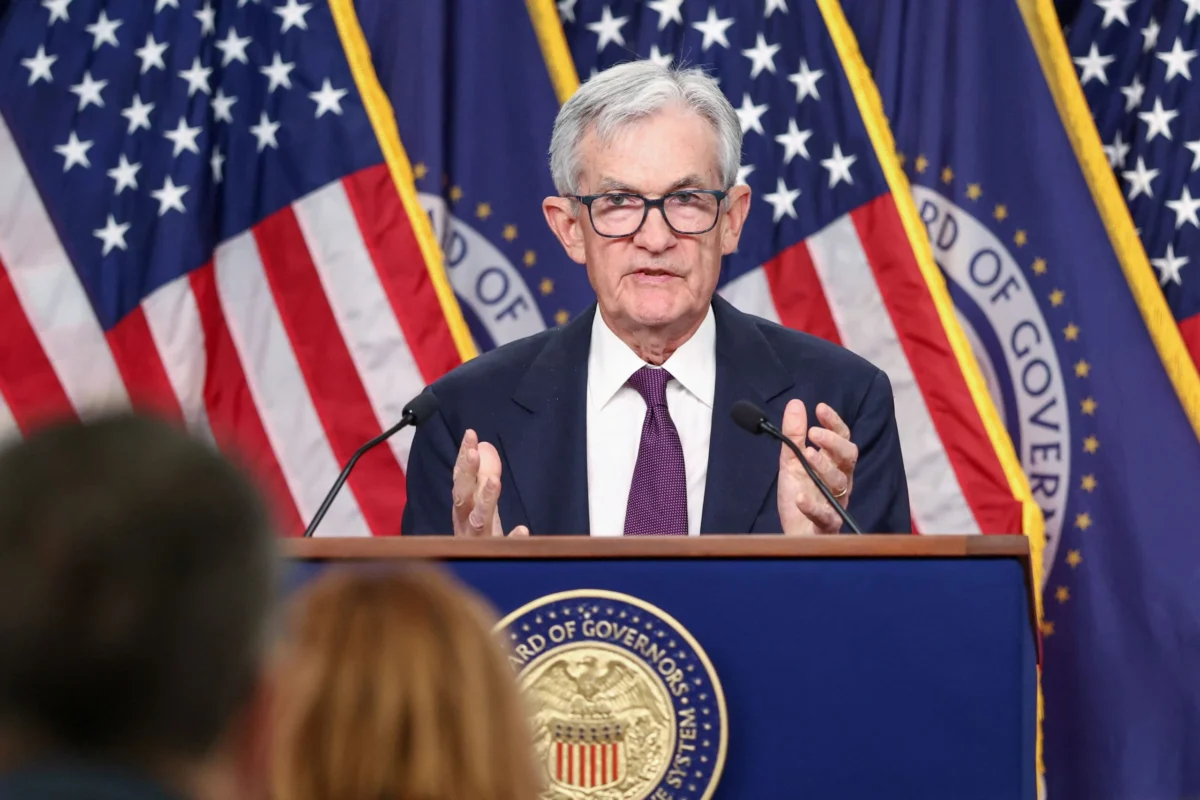
Washington, D.C. – Federal Reserve Chair Jerome Powell, following a pivotal two-day meeting of the Federal Open Market Committee (FOMC) on March 18, 2026, articulated a landscape rife with economic and geopolitical uncertainty, offering little in the way of definitive forward guidance for monetary policy. Despite persistent inflation and a slowing labor market, the central bank opted to hold its benchmark interest rate steady, a decision widely anticipated by markets. However, the post-meeting statement, updated economic projections, and Powell’s subsequent press conference underscored a deeply divided committee grappling with the profound implications of an escalating U.S.-Iran conflict and the elusive timing of future rate adjustments.
This cautious approach reflects a central bank committed to flexibility in a volatile environment, where traditional economic models are being challenged by unprecedented external shocks. The prevailing sentiment from Powell was one of prudence and adaptability, emphasizing that the path forward remains highly contingent on evolving data and geopolitical developments, particularly the unpredictable economic ramifications of the ongoing conflict in the Middle East. The central bank’s mandate to foster maximum employment and price stability faces a complex interplay of domestic economic signals and external pressures, making the task of monetary policy calibration exceptionally difficult.
The Federal Reserve’s Stance: Navigating Uncharted Waters
The March 2026 FOMC meeting concluded with no change to the federal funds rate, a decision that met market expectations. However, the accompanying communications painted a picture of a central bank deeply entrenched in a wait-and-see mode. The official statement saw only minor adjustments, signaling a reluctance to commit to any specific future trajectory. This lack of significant change in language is a deliberate strategy to maintain optionality, given the rapidly shifting economic landscape.
Historically, the Federal Reserve has often used its post-meeting statements to telegraph future policy intentions, providing markets with a degree of predictability. In contrast, the March 2026 statement offered a testament to the current opacity. Coupled with the update to the Summary of Economic Projections (SEP), commonly known as the "dot plot," which showed a modest dovish shift, the overall message was one of cautious optimism tempered by profound doubt. Chair Powell himself epitomized this sentiment, using variations of the term "uncertain" more than half a dozen times during his news conference. This linguistic emphasis serves as a clear indicator of the challenges facing policymakers in accurately forecasting economic variables and calibrating appropriate policy responses. The ongoing divergence between sticky inflation and other economic indicators, such as a robust (though slowing) labor market, contributes significantly to this internal uncertainty.
Geopolitical Turmoil: The Iran War’s Economic Shadow
A dominant theme throughout Powell’s press conference was the profound impact of the ongoing U.S. conflict with Iran on economic forecasting and monetary policy modeling. The Chair repeatedly emphasized the near impossibility of crafting effective policy in such a volatile geopolitical environment. "The thing I really want to emphasize is that nobody knows," Powell stated, underscoring the unpredictable nature of the conflict’s economic fallout. He cautioned that the economic effects "could be bigger, they could be smaller, they could be much smaller or much bigger. We just don’t know."
The escalating U.S.-Iran war has already triggered significant disruptions, most notably an oil shock that has pushed global crude prices higher. Geopolitical conflicts in the Middle East historically translate into energy market volatility, impacting global supply chains, increasing transportation costs, and ultimately fueling inflationary pressures. The Strait of Hormuz, a critical chokepoint for global oil shipments, remains a focal point of concern, with any disruption threatening to send crude oil prices soaring further. Beyond immediate energy costs, prolonged conflict can erode consumer confidence, deter business investment, and disrupt international trade routes, thereby dampening global economic growth. The Fed’s traditional economic models, reliant on relatively stable variables, struggle to incorporate such large, unpredictable exogenous shocks. This situation forces the central bank to adopt an even more data-dependent and agile approach, recognizing that rapid policy adjustments might be necessary as events unfold. Analysts generally concur that this geopolitical wildcard significantly complicates the Fed’s dual mandate, as efforts to tame inflation could be undermined by supply-side shocks, while efforts to support employment could be constrained by recessionary fears stemming from global instability.
Monetary Policy Outlook: The Elusive Rate Cut Timeline
Despite the pervasive uncertainty, the "dot plot" – the graphical representation of each FOMC member’s projection for the federal funds rate at the end of the current year and subsequent years – still pointed to one more rate cut in 2026 and another in 2027. However, a closer examination of the 2027 projections revealed a startling lack of consensus, resembling more of a "maze" than a unified outlook. This internal divergence within the FOMC underscores the deep divisions among policymakers regarding the appropriate future path of interest rates.
For instance, the projections for 2027 showed an extraordinary range of opinions: one official anticipates a rate hike, three foresee no change from the current level, four expect another single cut, six project two more cuts, three forecast three cuts, one official sees four cuts, and a final participant – widely presumed to be Governor Stephen Miran – projects five cuts. This wide spectrum of views highlights the difficulty in achieving a strong consensus on the committee and reflects differing assessments of inflation persistence, labor market resilience, and the overall trajectory of economic growth in the face of geopolitical headwinds.
Such a fractured outlook can introduce significant volatility into financial markets, as investors struggle to discern the Fed’s collective intention. It implies that future policy decisions will likely be highly contested and contingent on incoming economic data, rather than following a predetermined path. For businesses and consumers, this lack of clarity can complicate long-term financial planning, making decisions about investment, borrowing, and spending more challenging. The message is clear: while cuts are anticipated, their timing and magnitude remain highly fluid, subject to the evolving economic landscape and the shifting consensus within the FOMC.
Leadership in Flux: Powell’s Future at the Helm
Adding another layer of intrigue to the Fed’s current state is the question of Chair Powell’s future leadership. During each post-FOMC press conference, Powell has faced questions regarding his tenure, which as Chair is set to conclude. He reiterated that he has not yet made a decision about whether he will remain on the Board of Governors after his term as Chair expires. This statement, while non-committal, keeps open the possibility of his continued presence at the central bank.
More significantly, Powell explicitly stated that he would not be "going anywhere" as long as an ongoing investigation into him continues. Furthermore, he indicated that he would stay on as a "chair pro tem" until his successor, presumably former Governor Kevin Warsh, is confirmed. The role of Federal Reserve Chair is a highly influential position, typically serving a four-year term, while governors are appointed for 14-year terms. The confirmation process for a new Fed Chair or Governor involves Senate hearings and approval, a process that can be lengthy and politically charged. An ongoing investigation into the current Chair could complicate or delay such a transition, potentially creating a period of leadership uncertainty at a critical juncture for the U.S. economy.
The prospect of Powell serving as "chair pro tem" implies a period where the central bank’s leadership might be perceived as transitional, even if the individual in charge remains the same. This could have implications for the continuity and perceived independence of monetary policy, particularly in a volatile economic and geopolitical climate. Market participants typically value stability and clear leadership from the central bank, and a prolonged or contentious leadership transition could add to existing anxieties. Kevin Warsh, a former Fed Governor, is known for his hawkish leanings and market-oriented perspectives, and his eventual confirmation would likely signal a shift in the FOMC’s ideological balance, potentially influencing future policy debates.
Debunking "Stagflation": A Historical Perspective
A recurring concern among some economists and market observers, particularly given the recent oil price spikes, has been the specter of "stagflation" – a portmanteau of stagnation and inflation – reminiscent of the challenging economic environment of the 1970s. Chair Powell, however, firmly rejected this characterization, emphasizing that the current U.S. economic situation bears little resemblance to that historical period.
Stagflation, as experienced in the 1970s, was defined by a toxic combination of high inflation, high unemployment, and stagnant economic growth. This era was marked by severe oil shocks (like the 1973 OPEC oil embargo), structural shifts in the labor market, and a persistent wage-price spiral that proved incredibly difficult to unwind. Inflation soared to double digits, while unemployment rates also climbed significantly, and GDP growth decelerated sharply.
Powell contrasted this dire historical backdrop with the contemporary U.S. economy, which, despite an anemic hiring rate and inflation that has remained above the Fed’s 2% target for nearly five years, still exhibits "solid growth and low unemployment." While acknowledging the "very difficult situation" posed by persistent inflation and geopolitical shocks, Powell asserted, "It’s nothing like what they faced in the 1970s and [I would] reserve ‘stagflation’ for that." He conceded, "Maybe that’s just me," highlighting his strong personal conviction on this point.
The Fed’s current assessment points to a more resilient economy, supported by a robust labor market and healthy household balance sheets, even as it grapples with supply-side inflationary pressures exacerbated by the U.S.-Iran conflict. While fears of a 1970s-style nightmare have been fueled by the recent oil spike to $100 a barrel, Powell’s rejection suggests that the central bank believes the underlying structural factors are different today, and the economy is better equipped to absorb shocks without falling into a prolonged period of both high inflation and high joblessness. This stance provides a measure of reassurance, aiming to prevent a self-fulfilling prophecy of economic despair, even as the challenges remain formidable.
Expert Analysis and Market Implications
The cautious tone and fractured consensus emanating from the Federal Reserve’s March meeting have resonated across financial markets and expert commentary. Analysts largely interpret the Fed’s current posture as one of strategic patience, prioritizing flexibility over explicit forward guidance in an environment fraught with unprecedented variables.
Gina Bolvin, president of Bolvin Wealth Management Group, encapsulated this sentiment: "The Fed didn’t move today — but it didn’t need to. This is a central bank that’s comfortable waiting, watching, and staying flexible. One projected cut tells you everything: the Fed is not in a rush, and neither should investors be." Her observation underscores the market’s acceptance of a data-dependent Fed that is unwilling to pre-commit in a volatile climate. This suggests that investors should brace for continued market choppiness and avoid making aggressive bets based on immediate rate cut expectations.
Felix Aidala, an economist at Indeed, highlighted the inherent difficulties facing the central bank: "Although the move was widely expected, it underscores the difficult path ahead for the Fed, which now faces pressure on both sides of its dual mandate to keep employment high and inflation muted. Complicating matters further is the fact that Fed leaders are often basing hugely important decisions on weeks- or months-old data that may not fully capture the magnitude of rapid economic shifts, raising the risk that decisions may come too late or be based on outdated assumptions." Aidala’s comments point to the challenge of conducting monetary policy with a lag, especially when rapid geopolitical and economic shifts are occurring, increasing the risk of missteps or delayed responses.
Stephen Coltman, head of macro at 21shares, offered a perspective on the strategic implications of the leadership transition: "I expect given the volatile situation that the committee would like to try and do as little as possible so as to not rock the boat ahead of the new Fed chair taking over." This viewpoint suggests that the FOMC might be inclined towards maintaining the status quo, minimizing significant policy shifts, to ensure a smoother handover of leadership, thereby adding another layer of inertia to the policy-making process.
Collectively, these expert opinions point to an environment of sustained market uncertainty. Investors are likely to remain highly sensitive to incoming economic data, geopolitical headlines, and any subtle shifts in Fed communication. Bond markets may experience increased volatility as expectations for future rate cuts remain fluid, while equity markets could exhibit caution, particularly in sectors sensitive to energy prices or global trade disruptions. The U.S. dollar’s trajectory will also be closely watched, as its value often reflects perceived stability and interest rate differentials.
The Federal Reserve’s March 2026 meeting leaves markets and the public with a clear message: the path ahead is shrouded in uncertainty, heavily influenced by geopolitical dynamics, and subject to the evolving views of a diverse committee. The central bank remains in a reactive posture, ready to adapt to an economic landscape that defies easy prediction, while navigating a complex leadership transition.

0 Comments