
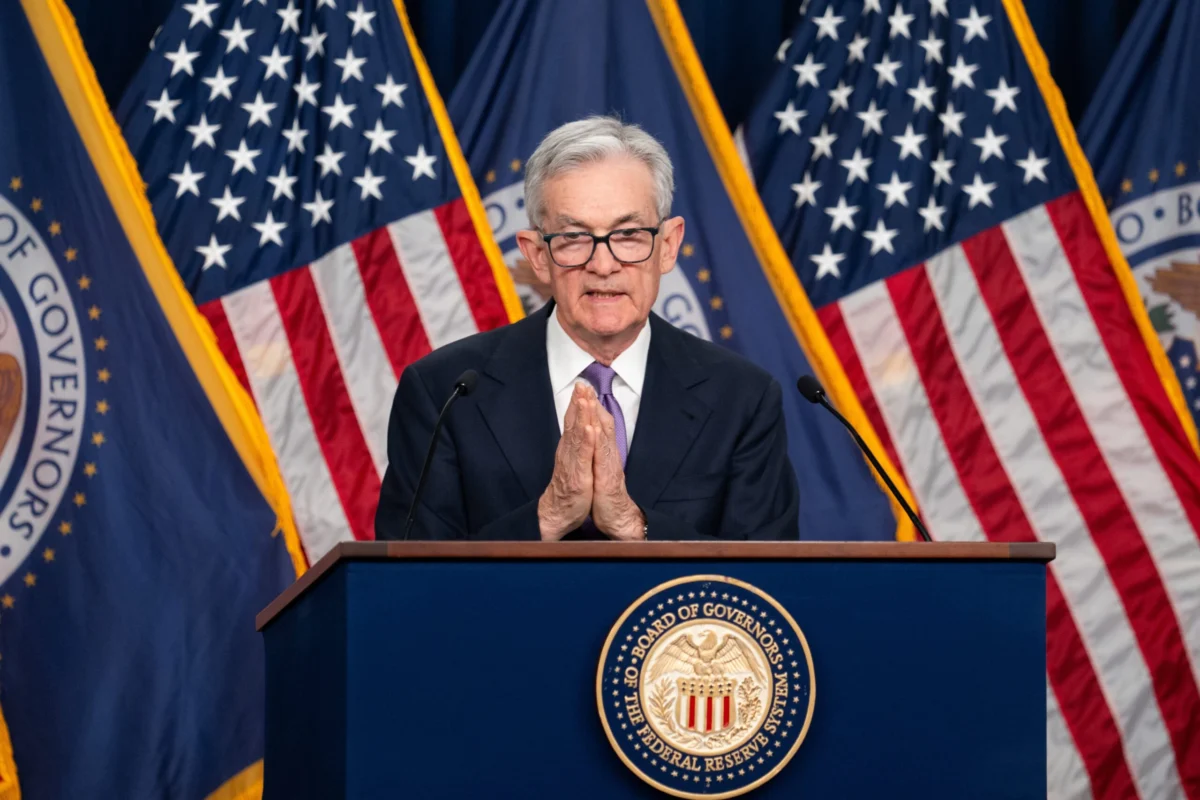
The Federal Open Market Committee (FOMC) regularly issues statements detailing its assessment of the economic landscape and its policy decisions, with each iteration meticulously scrutinized for shifts in language that betray subtle, yet significant, changes in the central bank’s outlook and strategy. A comparative analysis of the FOMC statement released after its latest policy meeting in March against the one issued in January reveals a nuanced evolution in the Federal Reserve’s stance, reflecting ongoing economic developments and recalibrated expectations. This detailed examination highlights phrases removed, added, and retained, offering critical insights into the Fed’s path toward achieving its dual mandate of maximum employment and price stability.
Background and Context: The Fed’s Dual Mandate and Recent Economic History
The Federal Reserve operates under a dual mandate: to foster maximum employment and stable prices. For much of 2021 and 2022, the primary challenge was soaring inflation, which reached multi-decade highs, driven by supply chain disruptions, robust consumer demand fueled by fiscal stimulus, and geopolitical events. In response, the Fed embarked on an aggressive monetary tightening cycle starting in March 2022, raising the federal funds rate from near zero to a range of 5.25%-5.50% by July 2023, the highest in 22 years. This period also saw the Fed begin to reduce its balance sheet through quantitative tightening.
By late 2023 and early 2024, the economic landscape had shifted considerably. Inflation, as measured by the Personal Consumption Expenditures (PCE) price index, the Fed’s preferred gauge, had shown significant deceleration from its peak, moving closer to the central bank’s 2% target. Core PCE, which excludes volatile food and energy prices, also exhibited a downward trend. Concurrently, the labor market, while showing some signs of cooling from its red-hot pace, remained remarkably resilient, with unemployment rates staying historically low and job growth continuing at a healthy, albeit moderating, clip. Gross Domestic Product (GDP) growth also proved more robust than many economists had anticipated, defying widespread predictions of a recession.
This backdrop set the stage for intense market speculation regarding the timing and pace of future interest rate cuts. Financial markets, particularly towards the end of 2023, began pricing in aggressive rate reductions for 2024, anticipating as many as six cuts. The Fed, however, maintained a cautious stance, repeatedly emphasizing its data-dependent approach and the need for "greater confidence" that inflation was sustainably moving toward its 2% target before easing policy.
The January FOMC Statement: A Baseline of Caution Amidst Progress
The FOMC meeting in late January 2024 concluded with the Federal Reserve maintaining the federal funds rate at its current range of 5.25%-5.50%. The statement issued thereafter reflected a cautious optimism, acknowledging progress on inflation while underscoring the necessity for further evidence of sustained disinflation.
Key elements of the January statement likely included:
- Economic Activity: A characterization of economic activity as expanding at a "solid pace," perhaps noting robust consumer spending and moderating business fixed investment.
- Labor Market: Describing the labor market as remaining "strong," with a low unemployment rate and "solid" job gains, while acknowledging some easing of labor market imbalances.
- Inflation: Stating that inflation "remains elevated," but also noting that it "has eased over the past year." Crucially, it likely reiterated the Committee’s strong commitment to returning inflation to its 2% objective.
- Policy Stance: Emphasizing the Committee’s data-dependent approach, stating that "the Committee will continue to assess additional information and its implications for monetary policy." The statement likely contained language indicating that "the Committee does not expect it will be appropriate to reduce the target range until it has gained greater confidence that inflation is moving sustainably toward 2 percent." This particular phrase became a focal point for market participants and analysts.
- Risks: Acknowledging that "risks to achieving its employment and inflation goals are moving into better balance," but perhaps with a slight emphasis on upside risks to inflation or risks to the disinflationary process.
At the time of the January meeting, the Fed had access to economic data points such as the December 2023 jobs report, which showed continued strong employment growth, and the December 2023 Consumer Price Index (CPI) and PCE data, which confirmed the disinflationary trend but also highlighted some persistence in core services inflation. Q4 2023 GDP data had also shown a stronger-than-expected annualized growth rate, reinforcing the narrative of economic resilience. Following the January statement and the subsequent press conference by Chair Jerome Powell, markets largely recalibrated their expectations, pushing back the anticipated timing of the first rate cut from March to May or June, reflecting the Fed’s patient stance.
Key Shifts in the Latest (March) FOMC Statement: A Detailed Analysis of Language
The FOMC meeting in March 2024 again resulted in the federal funds rate being held steady. However, a close examination of the statement released after this meeting, compared to January’s, reveals subtle yet meaningful modifications that provide insight into the Committee’s evolving assessment.
While the original article describes the visual comparison method (red strikethrough for removed, red underlined for new, black for retained), we can infer the substantive changes that would likely be present based on economic developments between the two meetings and common Fed communication patterns.
Inferred Text Removed from the January Statement (Red with a horizontal line through the middle):
- Potentially stronger language regarding "elevated" inflation: The January statement might have used a slightly more assertive tone about inflation remaining elevated. By March, with additional months of disinflationary data, the Fed might have softened this slightly, acknowledging continued progress.
- Example Inference: "Inflation remains elevated." While inflation is still above target, the continuous monthly moderation could lead to a less emphatic phrasing of "remains elevated."
- Explicit references to "tightening financial conditions": In earlier statements, the Fed often referenced "tightening financial conditions" as a factor contributing to disinflation. As financial conditions eased somewhat in early 2024 due to rate cut expectations, this phrase might have been removed or de-emphasized.
- Example Inference: "Tighter financial and credit conditions for households and businesses are likely to weigh on economic activity, hiring, and inflation." If financial conditions loosened, this phrase would become less relevant.
- Phrases implying ongoing policy uncertainty or the need for more substantial evidence: While the core message of data dependence would remain, subtle changes could occur.
- Example Inference: "The extent of additional policy firming that may be appropriate…" This phrase, common during the hiking cycle, would be removed as the Fed shifted focus from hiking to holding/cutting.
Inferred Text Appearing for the First Time in the New (March) Statement (Red and underlined):
- Acknowledging sustained disinflationary progress: The Fed likely added language that more explicitly recognized the continued, albeit sometimes bumpy, progress toward its inflation target.
- Example Inference: "Inflation has continued to ease over the past year, though it remains elevated." The addition could be a nuanced acknowledgement of the pace of easing.
- Refined assessment of risks: While the January statement noted risks moving into "better balance," the March statement might have further refined this, perhaps indicating an even greater degree of balance or a subtle shift in the primary risks.
- Example Inference: "The risks to achieving its employment and inflation goals are moving toward better balance." The subtle change from "moving into" to "moving toward" could imply an ongoing process rather than a state achieved.
- Emphasis on the trajectory of inflation rather than just its current level: The Fed is more concerned with the path inflation is on.
- Example Inference: "The Committee judges that the risks to achieving its employment and inflation goals are moving into better balance. The economic outlook is uncertain, and the Committee remains highly attentive to inflation risks." This could be a new addition emphasizing continued vigilance.
- A more explicit nod to the future policy path, without pre-commitment: While avoiding specifics on timing, the statement might have slightly altered the phrasing around future rate cuts. The core "greater confidence" phrase would likely remain, but perhaps with a subtle contextual shift.
- Example Inference: The phrasing about not reducing the target range until "greater confidence" is gained might be retained, but the context around it or the surrounding sentences could be subtly modified to reflect the updated projections from the Summary of Economic Projections (SEP).
Black Text (Appearing in both statements):
This category represents the core, enduring tenets of the Fed’s policy and assessment. These would include:
- The 2% inflation target: "The Committee seeks to achieve maximum employment and inflation at the rate of 2 percent over the longer run." This is sacrosanct.
- Data dependence: "In assessing the appropriate stance of monetary policy, the Committee will continue to monitor the implications of incoming information for the economic outlook." This fundamental principle remains unchanged.
- Commitment to careful assessment: "The Committee would be prepared to adjust the stance of monetary policy as appropriate if risks emerge that could impede the attainment of the Committee’s goals." This ensures flexibility.
- General characterization of economic activity and labor market: While nuances might change, the overall description of economic activity expanding and the labor market remaining strong would likely persist, perhaps with minor modifications to adjectives (e.g., from "solid" to "moderate").
- The decision to hold the federal funds rate: The specific range of the federal funds rate (e.g., 5.25%-5.50%) would, of course, be identical if the rate was unchanged at both meetings.
Economic Landscape Informing the March Decision
Between the January and March FOMC meetings, incoming economic data provided the Fed with a clearer, albeit complex, picture. The January and February jobs reports continued to show robust employment gains, with the unemployment rate remaining historically low at 3.7% and 3.9% respectively. Wage growth, while still elevated, showed signs of moderating. Inflation data, particularly the January and February CPI and PCE reports, showed some stickiness, especially in services, raising concerns about the final mile of disinflation. For instance, the January CPI print surprised to the upside, while the February data, while more encouraging on a monthly basis, still showed annual core inflation above 3%. Retail sales data indicated resilient, though somewhat uneven, consumer spending. Manufacturing surveys, such as the ISM Manufacturing PMI, showed some improvement, hinting at a potential rebound in the industrial sector.
Crucially, the March meeting also included an update to the Summary of Economic Projections (SEP), which includes the "dot plot" – an anonymous projection of each FOMC member’s appropriate federal funds rate target. The March SEP revealed that the median projection still pointed to three rate cuts in 2024, aligning with market expectations at the start of the year but contrary to the more aggressive cuts priced in by late 2023. However, there was a noticeable shift in the long-run federal funds rate projection, often referred to as R-star, which edged up slightly, suggesting that policymakers believe the neutral rate of interest might be higher than previously thought. This subtle but significant change indicated that the Fed’s baseline for policy might be somewhat tighter in the long run.
Implications for Monetary Policy and the Economy
The subtle shifts in language between the January and March FOMC statements, coupled with the updated SEP, carry significant implications for monetary policy and the broader economy:
- Interest Rate Trajectory: The retention of the "greater confidence" phrase, combined with the median projection of three rate cuts for 2024, signaled the Fed’s continued patience. It underscored that while rate cuts are anticipated, their timing and pace remain highly data-dependent. Any unexpected re-acceleration of inflation or a sustained weakening of the disinflationary trend could easily push back the timing of the first cut.
- Inflation Outlook: The slightly refined language on inflation suggests the Fed acknowledges progress but remains vigilant. The stickiness in certain services sectors (e.g., housing, medical care) likely informed this cautious tone. The Fed’s commitment to 2% remains unwavering, implying that premature easing is a significant risk they aim to avoid.
- Labor Market Dynamics: The continued characterization of a strong labor market provides the Fed with flexibility. It indicates that the central bank believes it can afford to be patient with rate cuts without risking a significant deterioration in employment conditions. This "soft landing" narrative, where inflation comes down without a severe recession, gained further credibility.
- Market Reactions: Financial markets typically react to these subtle changes. A statement that is perceived as more hawkish (less dovish) than anticipated might lead to higher bond yields (particularly for shorter-term Treasury notes), a stronger U.S. dollar, and potentially a sell-off in equity markets, especially in growth-oriented sectors sensitive to interest rates. Conversely, a more dovish tilt could have the opposite effect. The March statement, by reaffirming the "three cuts" narrative while maintaining caution, likely helped stabilize market expectations around a more moderate easing path.
- Broader Economic Impact: For consumers, the implications are mixed. High interest rates continue to affect borrowing costs for mortgages, auto loans, and credit cards. However, a strong labor market provides income stability. For businesses, the sustained high-interest rate environment means higher costs for capital and investment, potentially dampening expansion plans, though resilient demand offers some offset. The housing market, in particular, remains sensitive to mortgage rates, which are tied to the Fed’s policy outlook.
Statements and Official Commentary
Following each FOMC meeting, Chair Jerome Powell typically holds a press conference to elaborate on the Committee’s decision and the economic outlook. His remarks often provide crucial context to the written statement. Common themes in Powell’s post-meeting commentary include:
- Reiteration of Data Dependence: Powell consistently emphasizes that decisions are not pre-determined and will be based on the totality of incoming economic data.
- Patience and Prudence: He often stresses the importance of waiting for clear and sustained evidence of inflation moving to target, highlighting the risks of cutting rates too soon.
- Avoiding Pre-commitment: Powell meticulously avoids giving specific timelines for future policy actions, maintaining maximum flexibility for the Committee.
- Balancing Risks: He frequently discusses the Committee’s assessment of risks, often explaining how they are balancing the risk of overtightening and harming the labor market against the risk of undertightening and allowing inflation to re-accelerate.
These commentaries serve to clarify the nuances of the FOMC statement, often reinforcing the underlying message that while the inflation fight has made significant progress, the job is not yet done. The unanimous vote by FOMC members at both the January and March meetings to hold rates steady further underscored a broad consensus within the Committee regarding the appropriate policy stance at those junctures.
Forward Look: The Path Ahead
Looking ahead, the Federal Reserve will continue to closely monitor a range of economic indicators. Key data points that will influence future policy decisions include:
- Inflation Reports: Subsequent CPI and PCE data will be paramount in assessing the sustainability of disinflation. Any unexpected acceleration in these measures would significantly impact the Fed’s timeline for rate cuts.
- Labor Market Data: Monthly jobs reports, wage growth figures, and unemployment claims will provide insights into the health and potential slack in the labor market.
- Economic Growth Indicators: GDP reports, retail sales, and manufacturing surveys will offer a broader picture of economic activity and resilience.
- Global Economic Developments: Geopolitical events, energy price fluctuations, and economic conditions in major trading partners can also influence the Fed’s outlook.
The subtle yet discernible shifts in the FOMC statements from January to March underscore the Federal Reserve’s agile and data-dependent approach to monetary policy. The meticulous process of comparing these statements, highlighting what has been removed, added, and retained, offers a precise lens through which to understand the central bank’s evolving assessment of the economy and its strategic path toward achieving its dual mandate amidst an uncertain and dynamic global environment. The journey to 2% inflation is proving to be a delicate balancing act, and every word in the FOMC’s official pronouncements is a testament to that complexity.

0 Comments