
Global metal markets experienced a dramatic and broad-based sell-off on Thursday, March 19, 2026, as escalating geopolitical tensions from the ongoing U.S.-Iran conflict sent shockwaves through the financial world. Investors, grappling with the profound implications of soaring oil prices and the specter of renewed inflation, aggressively shed positions across the commodity spectrum, impacting both precious and industrial metals. The widespread decline underscored deep-seated anxieties about the global economy’s trajectory, threatening to derail hopes for a sustained recovery and potentially usher in a period of economic instability.
A Broad-Based Sell-Off Across Metal Categories
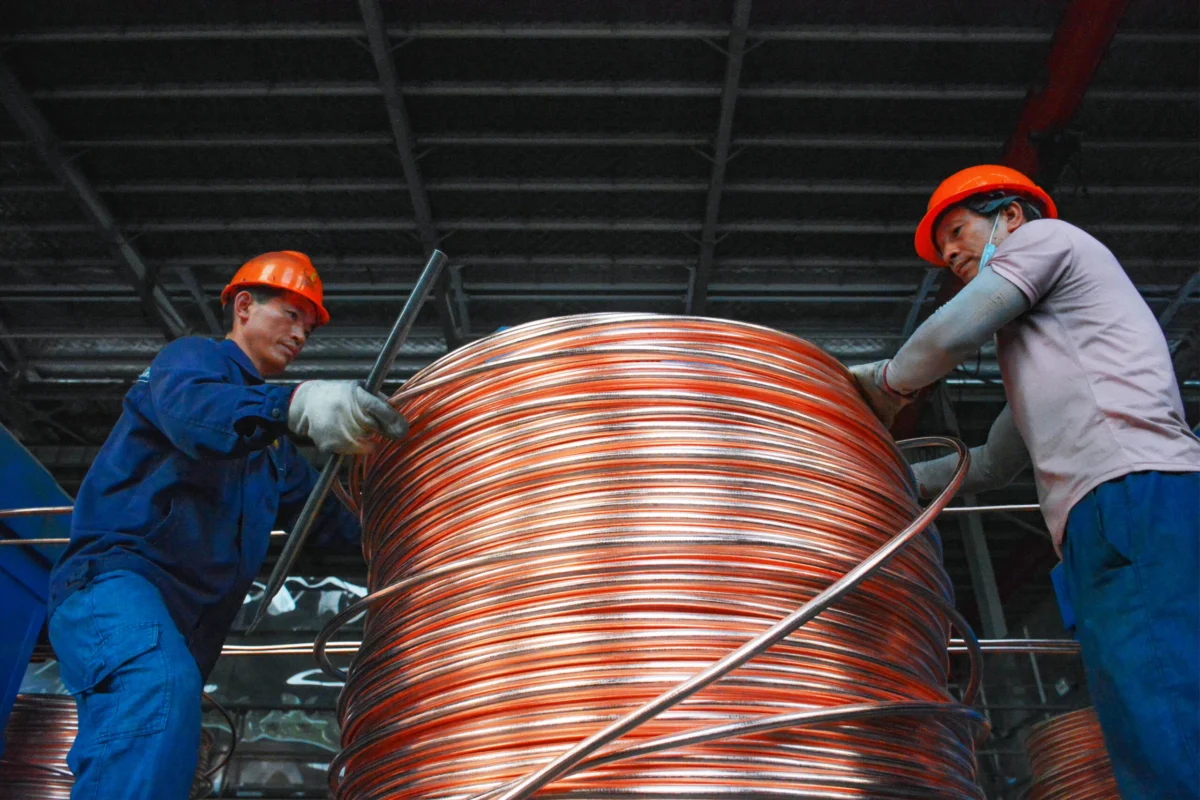
The market capitulation on Thursday was severe and comprehensive. Gold, traditionally a safe-haven asset during times of uncertainty, paradoxically plummeted nearly 6% in its steepest single-day decline in recent memory. This sharp retreat saw the yellow metal briefly trade below the psychological $2,000 per ounce mark, a level it had comfortably held for months. Silver, often dubbed "poor man’s gold" due to its similar but more volatile price movements, fared even worse, tumbling a staggering 8%. The intensity of the selling pressure was not confined to precious metals; industrial stalwarts like copper and palladium also buckled under the weight of mounting economic concerns. Copper, a bellwether for global economic health and a crucial material for infrastructure, electronic devices, and electrical wiring (as seen in a metal melting facility in Yuexi County, central China’s Anhui Province, producing recycled copper rods on July 11, 2025), fell 2%. Palladium, critical for catalytic converters and electronics, saw its value erode by 5.5%. This broad-based contraction signaled a significant shift in market sentiment, moving from an initial "risk-off" response favoring gold to a more profound worry about the foundational strength of global demand.
The initial phase of the U.S.-Iran conflict, which began to intensify in late 2025 and escalated significantly into early 2026, had seen some divergent reactions. Gold and silver, despite their safe-haven reputation, had been trending downwards since the war’s onset, largely due to the immediate impact of rising interest rate expectations. Industrial metals, however, had initially shown greater resilience, remaining relatively stable in the weeks following the conflict’s outbreak. This stability was predicated on the belief that global industrial demand might weather the storm, or that supply disruptions could even offer some support. The events of Thursday, however, marked a turning point, indicating that recessionary fears were now overriding any potential supply-side considerations for these foundational commodities. The comparative performance of gold and silver against industrial metals like copper and palladium since February 27, 2026, clearly illustrates this divergence, with precious metals experiencing earlier and more pronounced declines, followed by industrial metals as growth concerns mounted.
The Geopolitical Quagmire and Oil’s Inflationary Grip
The genesis of the current market turmoil lies squarely in the intensifying U.S.-Iran war. While the specifics of its outbreak remain complex, the conflict rapidly escalated, primarily impacting the critical oil shipping lanes in the Persian Gulf. Reports of targeted strikes on key energy infrastructure, including a significant attack on a Qatari LNG facility on March 19, 2026, sent global oil benchmarks skyrocketing. Brent crude, the international standard, surged past $120 a barrel, representing an increase of over 25% since the beginning of the year and a peak not seen since the 2022 energy crisis following Russia’s invasion of Ukraine. This surge in crude oil prices is not merely a matter of higher fuel costs; it triggers a cascading inflationary effect across the entire global economy.
Rising oil prices act as a direct cost-push inflation factor, increasing expenses for transportation, manufacturing, and energy-intensive industries. Companies face higher operational costs, which they often pass on to consumers in the form of higher prices for goods and services. This surge in input costs inevitably translates into broader consumer price inflation, reigniting fears that inflation, which many central banks had only recently begun to bring under control, would once again spiral upwards. Such a scenario presents a formidable challenge for monetary policymakers worldwide. The primary tool for combating inflation is raising interest rates, a strategy that directly impacts the appeal of non-yielding assets like gold and can significantly stifle economic growth, thereby reducing demand for industrial metals.
Monetary Policy Tightening and the Dollar’s Ascent
The prospect of resurgent inflation has firmly cemented expectations that central banks, particularly the U.S. Federal Reserve, will be forced to maintain, or even increase, their benchmark interest rates for longer than previously anticipated. Prior to the conflict, markets had begun to price in potential rate cuts later in 2026, signaling a belief that inflation was largely tamed and economies were heading for a "soft landing." The U.S.-Iran war has shattered this outlook, replacing it with a hawkish tilt in monetary policy expectations.
Higher interest rates have a twofold negative impact on gold. Firstly, they increase the opportunity cost of holding the precious metal. Unlike bonds or savings accounts, gold does not offer a yield or pay interest. When interest rates rise, investors are incentivized to move capital into yielding assets, making gold a less attractive investment by comparison. Secondly, higher U.S. interest rates typically strengthen the U.S. dollar. Since most commodities, including gold, are priced in dollars, a stronger dollar makes them more expensive for holders of other currencies, thereby dampening international demand and putting downward pressure on prices. On Thursday, the U.S. Dollar Index (.DXY), which measures the dollar against a basket of six major currencies, surged to multi-year highs, trading above 106, further exacerbating the sell-off in dollar-denominated assets. Peter Boockvar, Chief Investment Officer at One Point BFG Wealth Partners, succinctly captured this dynamic: "The risks to inflation taking away the Fed rate cuts that were priced in, and seeing interest rate increases across the world, and real rates rising, that has been the drag on gold." The U.S. 10-year Treasury yield, a key benchmark for borrowing costs and a proxy for market expectations of future rates, reflected this sentiment, briefly crossing the 4.300% threshold on Thursday, signaling heightened investor demand for safe, yielding government debt over non-yielding alternatives.
Industrial Metals: The Canary in the Economic Coal Mine
While gold’s decline is primarily driven by monetary policy expectations and dollar strength, the slump in industrial metals like copper and palladium points to a more fundamental concern: slowing global economic growth and the looming threat of recession. These metals are not merely speculative assets; they are foundational components of modern industrial economies, deeply embedded in the supply chains of various sectors.
Copper, often referred to as "Dr. Copper" by analysts because of its uncanny ability to predict economic turning points, is ubiquitous in manufacturing, construction, and technology. It is found in everything from electrical wiring and plumbing systems to electric vehicle components and renewable energy infrastructure. A sustained decline in copper prices is widely interpreted by Wall Street as a leading indicator of weakening industrial demand and, by extension, slowing economic activity. The 2% drop on Thursday, following previous declines, sent a clear signal that the market anticipates a significant contraction in global manufacturing and construction sectors. Recent Purchasing Managers’ Index (PMI) data from major economies, which had shown signs of stagnation even before the war, are now expected to deteriorate further. Similarly, palladium, an essential catalyst in vehicle exhaust systems, a component in fuel cells, and used in high-tech electronics, also saw a substantial decline, reflecting concerns about reduced automotive production, diminished consumer spending on durable goods, and a general slowdown in technological investment. The synchronized downturn of copper and palladium underscores a systemic concern for global industrial output.
The consensus on Wall Street is growing increasingly grim: the longer the U.S.-Iran war persists and oil prices remain elevated, the greater the risk of "demand destruction." This term refers to the point at which high energy costs compel consumers and businesses to drastically alter their spending and investment habits, leading to a significant slowdown in economic activity. Such a scenario, many fear, would inevitably culminate in a global recession. Boockvar affirmed this sentiment, stating, "On the industrial metal side… people are now really worried about the recession risks." This shift in focus from immediate geopolitical shock to fundamental economic malaise highlights the depth of current market anxiety, suggesting a prolonged period of caution.
The Specter of Stagflation: A Divisive Debate
The combination of slowing growth (as indicated by industrial metal declines) and higher inflation (driven by oil prices and potential monetary tightening) raises the dreaded prospect of "stagflation" – a period characterized by stagnant economic growth, high inflation, and high unemployment. For many market participants, making "stagflation" trades, which typically involve favoring real assets like gold and certain commodities while avoiding growth-sensitive equities, has become a pressing consideration. The memory of the 1970s, when two major oil shocks plunged developed economies into stagflation, looms large in investors’ minds.
However, the debate over whether the current environment truly represents a stagflationary threat is sharply divided. Ed Yardeni, president of Yardeni Research, offered a more optimistic counter-narrative. In a Tuesday note to clients, he argued that "oil shocks are less likely to trigger the kind of sustained stagflation seen in the past, particularly during the 1970s." Yardeni referenced the economic consequences of the 1973 OPEC oil embargo, a historical period often invoked when discussing stagflation. He pointed to more recent history, noting that Russia’s invasion of Ukraine in 2022, while causing an oil shock and contributing to higher inflation, did not ultimately lead to a global recession. He suggested that economies are more resilient and less energy-dependent now, with greater energy efficiency, diversified supply chains, and more robust central bank independence and credibility.
This cautious optimism was echoed by Federal Reserve Chair Jay Powell in a press conference on Wednesday. While acknowledging the inflationary pressures, Powell stated, "I would reserve the term stagflation for a much more serious set of circumstances." His remarks suggested that while the economic landscape is challenging, it has not yet reached the severe confluence of factors that defined the stagflationary era of the 1970s, which included entrenched inflationary expectations, weak labor unions, and less agile monetary policy. The current labor market, for instance, remains relatively robust in many developed economies, a key differentiator from the high unemployment rates of previous stagflationary periods.
Gold’s Enduring Appeal: The "Debasement Trade" and Real Assets
Despite its recent sharp decline, some analysts believe gold’s long-term appeal remains intact, particularly if the broader economic narrative shifts towards concerns about sovereign debt and currency debasement. Peter Boockvar noted that while an end to the U.S.-Iran war is crucial for industrial metals to stabilize, gold could recover as market focus eventually returns to countries’ rising debts and deficits. Gold has historically performed well as a "debasement trade" – a hedge against the erosion of purchasing power of fiat currencies due to excessive government spending and money printing. The ongoing conflict, with its immense logistical and military costs, is only expected to exacerbate these fiscal imbalances, potentially leading to even greater national debts and deficits for participating nations, as increased military spending places additional strain on government budgets.
Christian Mueller-Glissmann, head of asset allocation research at Goldman Sachs, further supported gold’s potential role in a challenging economic environment. In a Thursday note, he highlighted gold’s utility "in case of a continued stagflationary shock, especially if real yields are declining." He emphasized that investor demand for real assets and foreign exchange diversification would provide "more support for Gold prices." This perspective suggests that while the immediate shock of higher rates and a stronger dollar has weighed on gold, its fundamental role as a store of value against systemic financial risks and currency devaluation could reassert itself as the longer-term implications of the conflict and monetary policies unfold.
Broader Market Implications and the Road Ahead
The metal market sell-off is not an isolated event but a clear indicator of a broader shift in investor sentiment, reflecting heightened risk aversion across financial markets. Equity markets globally experienced significant declines on Thursday, with major indices in the U.S., Europe, and Asia all registering losses of 1-3%. Bond yields, particularly for longer-dated government bonds, surged as investors demanded higher compensation for inflation risk, indicating a flight to safety within the fixed-income space for those seeking yield. Currencies, particularly those of commodity-exporting nations and emerging markets, also came under pressure against the surging U.S. dollar, intensifying capital outflow concerns.
The road ahead remains fraught with uncertainty. A swift and diplomatic resolution to the U.S.-Iran conflict would undoubtedly provide significant relief to commodity markets and global economies, allowing oil prices to stabilize and reducing inflationary pressures. However, the nature of geopolitical conflicts makes such an outcome unpredictable and often protracted. In the absence of a quick resolution, central banks will face immense pressure to balance the twin mandates of price stability and economic growth, potentially forcing difficult trade-offs that could impact employment and investment. Governments, meanwhile, will grapple with the dual challenges of funding military expenditures and mitigating the economic fallout for their citizens and businesses.
For investors, the current environment demands careful consideration and strategic repositioning. The volatility underscores the interconnectedness of global events, from geopolitical conflicts to commodity markets and monetary policy. While the immediate outlook for metals appears challenging, the long-term fundamentals and specific roles of assets like gold in hedging against systemic risks continue to be a subject of intense analysis and debate. The market is clearly signaling a new phase of economic anxiety, where the interplay of war, inflation, and recessionary fears will define investment strategies for the foreseeable future.

0 Comments