
As the collegiate basketball season reaches its zenith with the commencement of the annual March Madness tournament, the focus of the sporting world shifts toward the fundamental mechanics that define the game. While the spectacle of high-flying dunks often captures highlights, the outcome of high-stakes tournament play is frequently decided by a player’s ability to execute a consistent and accurate jump shot under pressure. Mastery of the basketball shot is a complex synthesis of biomechanics, psychological composure, and relentless repetition, transforming a simple physical act into a precise science.
The Evolution and Technical Foundation of the Jump Shot
The jump shot, now the standard offensive weapon in basketball, was once a radical departure from the traditional set shots of the early 20th century. Pioneers such as Kenny Sailors and Joe Fulks are credited with popularizing the airborne release in the 1940s, a move that fundamentally altered the defensive geometry of the court. Today, the shot is viewed not as a singular movement of the arms, but as a kinetic chain that begins at the feet and terminates at the fingertips.
According to sports biomechanics researchers, a successful shot relies on "triple extension"—the simultaneous extension of the ankles, knees, and hips. This sequence generates the upward force necessary to propel the ball toward a rim situated ten feet above the hardwood. For an elite shooter, the energy transfer must be fluid; any "hitch" or pause in the motion results in a loss of power, forcing the upper body to compensate and often leading to a decrease in accuracy.
The Chronology of a Perfect Release
To understand the mechanics of the shot, one must analyze the sequence of movements that occur in the span of less than a second. This chronology is essential for players at all levels, from youth leagues to the professional ranks of the NBA.
Phase I: The Stance and Base
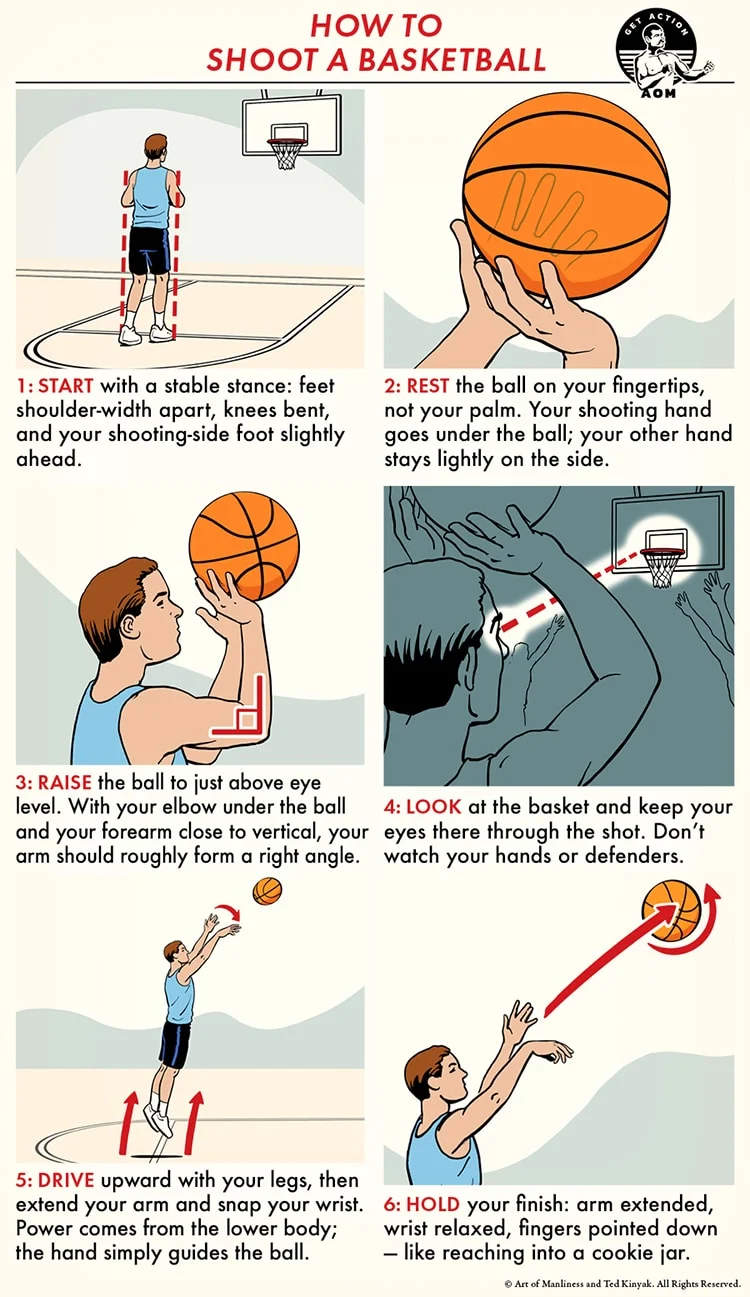
The foundation of the shot is established before the ball even leaves the player’s waist. A proper stance requires feet to be approximately shoulder-width apart. While traditional coaching often emphasized "squaring" the toes directly to the basket, modern shooting consultants frequently advocate for a slight "tilt." By angling the feet slightly away from the shooting hand (e.g., a right-handed shooter pointing toes slightly toward the left), the player aligns their shoulder, elbow, and hip with the rim, reducing tension in the neck and upper back.
Phase II: Hand Placement and the "Shot Pocket"
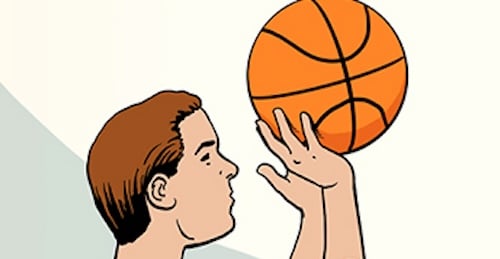
As the ball is brought into the "shot pocket"—the area near the chest or brow where the upward motion begins—hand placement becomes the primary variable. The shooting hand should be positioned behind the ball, with fingers spread wide to maximize surface area contact. The non-shooting hand, or "guide hand," rests on the side of the ball. Its sole function is to stabilize the ball during the lift; it should never contribute to the forward propulsion.
Phase III: The Lift and Release
As the legs extend, the ball is lifted in a straight vertical line. Experts suggest maintaining an "L" shape with the shooting arm, where the elbow is tucked in rather than flared out. The release point should be at the apex of the jump or slightly before, ensuring that the momentum of the jump is transferred into the flight of the ball.
Phase IV: The Follow-Through
The final stage is the follow-through, often described by coaches as "reaching into the cookie jar." The wrist should snap forward, creating backspin (prolate spheroidal rotation). This backspin is critical; it creates a "soft" touch, meaning that if the ball hits the rim, the rotation is more likely to cause it to bounce into the net rather than fly off the backboard.
Statistical Analysis of Shooting Efficacy
The importance of shooting mechanics is underscored by the data-driven evolution of the modern game. In the National Basketball Association (NBA), the "Three-Point Revolution" has placed a premium on distance shooting. Over the last decade, the average number of three-point attempts per game has risen by nearly 50%.
Data from the 2023-2024 season indicates that the league-average field goal percentage for a mid-range jump shot hovers around 40-42%, while elite three-point shooters maintain a clip of 38% or higher. When adjusted for the extra point, a 38% three-point shooter is more efficient than a 50% two-point shooter. This statistical reality has forced players to refine their mechanics to maintain accuracy from increasingly greater distances.
Furthermore, physics studies conducted on the trajectory of the ball suggest that the "optimal" entry angle into the rim is approximately 45 degrees. A shot with a flat arc has a much smaller "effective" rim diameter to fall into, whereas a shot with a higher arc utilizes more of the 18-inch diameter of the hoop. Consistent mechanics are the only way to ensure this optimal arc is replicated on every possession.
Professional Perspectives and Training Methodologies
Coaching staff at the collegiate and professional levels emphasize that while form is vital, "shot discipline" and "rhythm" are equally important. Legendary coach John Wooden famously emphasized that "intensity" and "repetition" were the keys to any basketball skill. Modern trainers, such as Drew Hanlen or Stephen Curry’s personal coaches, utilize high-speed cameras and sensors to track the "dip" of the ball and the degree of the elbow’s angle.
"The goal is not to have a ‘textbook’ shot that looks like a drawing," says one NBA shooting consultant. "The goal is to have a ‘repeatable’ shot. If a player has a slight quirk in their form but can replicate it exactly 1,000 times in a row under fatigue, that is a good shot."
The training regimen for high-level athletes involves "game-speed" practice. Shooting 500 stationary free throws is beneficial for muscle memory, but modern methodology suggests that shooters must practice coming off screens, shooting off the dribble, and shooting while retreating to simulate the chaotic environment of a real game.
Psychological Implications and the "Clutch" Factor
The ability to maintain shooting mechanics under duress is what separates "gym shooters" from "clutch performers." In the closing seconds of a game, physiological responses—such as increased heart rate, adrenaline spikes, and muscle tension—can interfere with fine motor skills.
Psychologists refer to this as "proprioceptive interference." When a player is stressed, they tend to "aim" the ball using their small muscles (fingers and wrists) rather than "shooting" the ball with their large muscles (legs and core). This often results in "short" shots that hit the front of the rim. Disciplined shooters combat this through "mental cues"—short, internal phrases like "keep the elbow in" or "finish high"—that redirect their focus back to their practiced mechanics.
Broader Impact and Social Implications
Beyond the professional arena, the mastery of the basketball shot remains a cornerstone of physical education and community recreation. Basketball is one of the most accessible sports globally, requiring only a ball and a hoop. The "Art of Manliness" and similar instructional guides highlight that basic athletic competence—knowing how to throw a spiral, swing a bat, or shoot a jumper—serves as a bridge for social engagement.
For youth, learning the mechanics of a jump shot teaches the value of incremental progress. Unlike many aspects of life, the feedback loop in shooting is instantaneous: the ball either goes in or it does not. This teaches players to analyze their failures, adjust their stance, and try again—a microcosm of the scientific method applied to physical movement.
As March Madness continues, the focus will remain on the bracket-busting upsets and the star players. However, the underlying story of every game will be the decades of practice and the minute physical adjustments made by players as they release the ball. Whether in a sold-out arena or a quiet suburban driveway, the physics of the jump shot remains a universal language of precision, discipline, and athletic endeavor. The consistency of the motion, the arc of the flight, and the snap of the net are the results of a technical process that continues to define the sport of basketball in the 21st century.

0 Comments