
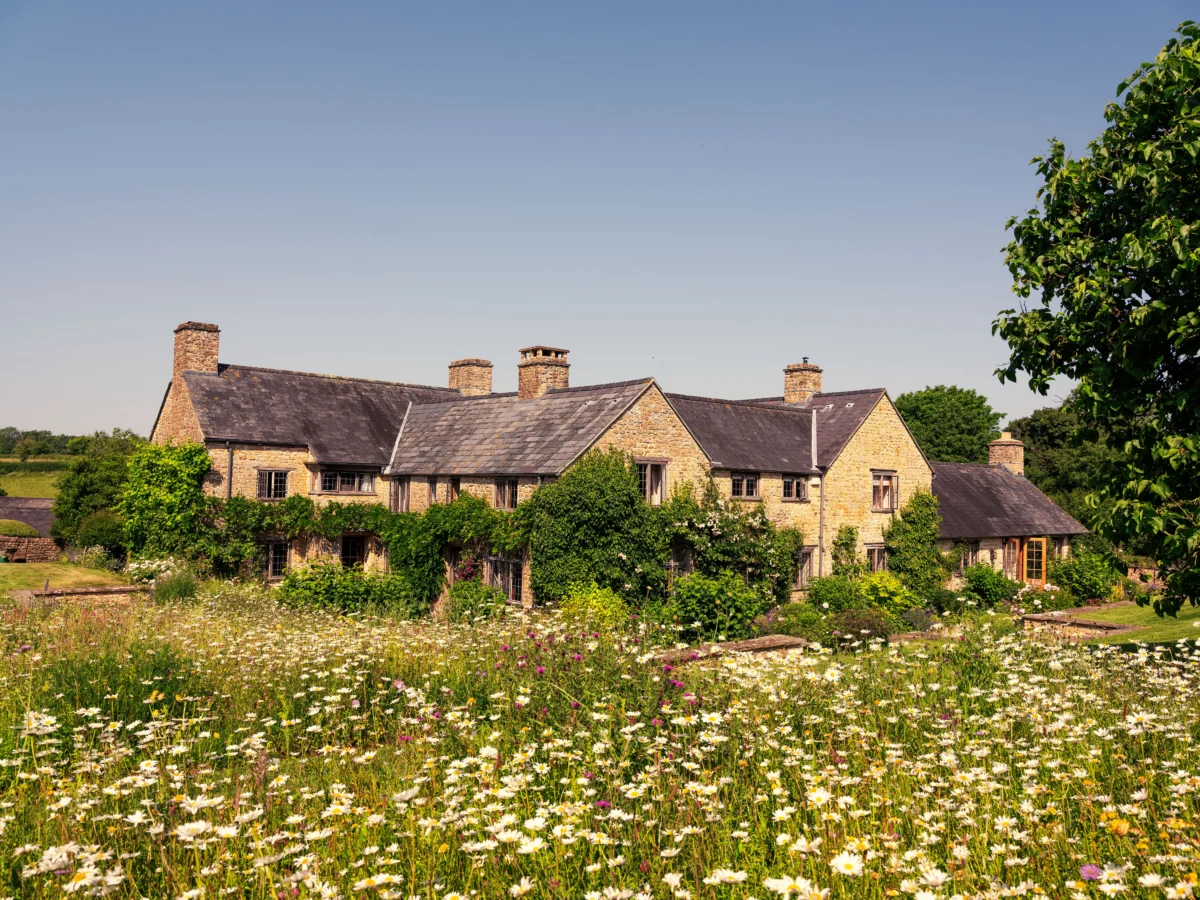
In the heart of Dorset, southwest England, amidst the rolling hills and timeless landscapes that have inspired literary giants like Thomas Hardy, lies an estate where a unique horticultural demarcation line exists, mirroring the enduring partnership of its owners, Johnnie and Sophie Boden. This is not merely a property; it is a testament to a shared life, a thriving business, and a profound appreciation for the land. The country house, a cornerstone of their Dorset haven, serves as the physical boundary: beyond the wide stone steps leading from its terraces, Johnnie’s domain of wildflower meadows unfolds, a canvas where his vision for untamed natural beauty takes precedence. Below these steps, however, Sophie’s meticulously curated garden reigns supreme, a symphony of romantically billowing shrubs and perennials. This clear division, while perhaps a touch whimsical, speaks volumes about the complementary forces that have shaped both their personal lives and the globally recognized brand they have built.

A Legacy Forged in Style and Entrepreneurship
Johnnie Boden, the visionary behind the eponymous Boden clothing company, one of Britain’s most successful and internationally recognized brands, acquired the sprawling 500-acre estate in 2005. The company, which began with a mail-order catalog in 1991, quickly became synonymous with a quintessential British lifestyle. Its signature aesthetic—characterized by cheerful optimism, a love for the outdoors, vibrant colors, and an appealingly comfortable yet stylish sensibility—resonated deeply with consumers, particularly in export markets. The Boden brand cultivated an image of affluent, well-mannered individuals, their children impeccably dressed and joyfully engaged in outdoor pursuits, all set against a backdrop of idyllic country living. Even now, in his mid-60s, Johnnie exhibits the boundless energy and infectious enthusiasm of a man half his age. His dedication to his work, which extends to the meticulous management of his estate, is palpable. He is known for his keen eye for detail, a trait that has undoubtedly contributed to Boden’s commercial success and is equally evident in his approach to the estate’s renovation and landscaping. This commitment to excellence is reflected in the smallest of details, such as the precisely chosen shade of paint for the farm buildings—a bespoke Farrow & Ball mixture inspired by the blues of his alma maters, Eton College and the University of Cambridge (though he ultimately attended Oxford)—and the personalized labeling of each horse’s saddle in the stable, all meticulously rendered in the lowercase Bauer Bodoni font.
The Estate: A Canvas for Two Distinct Visions
The couple, alongside their three grown daughters, divides their time between London and their Dorset estate, spending approximately half the week in the tranquil countryside. Johnnie maintains an office in the farmstead’s 18th-century former threshing room, a space conducive to his entrepreneurial endeavors. The estate itself boasts a rich history, with evidence of settlement dating back to Roman times. The farmhouse, parts of which can be traced to the 17th century, is strategically positioned atop a slope, offering commanding views of the surrounding agricultural buildings. These include various cottages, produce sheds, and a significant 16th-century barn, many of which have been lovingly restored with traditional thatched roofs, a testament to the couple’s commitment to preserving the estate’s heritage. Architect Stuart Martin oversaw the comprehensive renovation project, ensuring a harmonious blend of historical authenticity and modern functionality.

However, the allure of the estate for the Bodens extended beyond the architectural merits of the farmhouse. "We didn’t really buy it for the house; we bought it for the setting," Johnnie admits. "There is no road noise or light pollution." This deliberate effort to remove modern intrusions, such as hidden electricity and phone wires, enhances the property’s timeless quality, evoking scenes from a Thomas Hardy novel, a fitting connection given their location in prime Hardy country, far removed from the clamor of urban life.
Cultivating the Land: From Profit to Pasture
Johnnie’s initial foray into farming the estate’s fields soon revealed the challenging nature of the local terrain. "It is very difficult soil here and there is a lot of stone," he observes. This realization prompted a strategic pivot: "So, I thought, there is no point in trying to make money; let’s treat it like a big garden and have wonderful wildflowers instead." This shift in perspective marked the beginning of a significant horticultural undertaking.

However, transforming the land into thriving wildflower meadows proved more complex than simply scattering seeds. Centuries of intensive farming had enriched the soil to the point where grass dominated, often overwhelming the delicate wildflowers. "I made so many mistakes," Johnnie confesses. The breakthrough came with a more drastic approach: scraping off the topsoil, relocating it elsewhere on the farm, and introducing chalk to create a low-fertility environment that would favor wildflowers. This ambitious endeavor also involved the expertise of Charles Flower of Flower Farms, who was enlisted to assist with the landscape restoration.
Today, Johnnie’s meadows are a vibrant tapestry of native flora. Patches of lady’s bedstraw, bladder campion, bird’s-foot trefoil, and oxeye daisies flourish, interspersed with the delicate blooms of common spotted, marsh, and bee orchids. This diverse ecosystem actively supports a rich array of wildlife, attracting a multitude of birds, butterflies, and small mammals, transforming the formerly agricultural land into a haven for biodiversity.

Sophie’s Sanctuary: A Symphony of Blooms and Fragrance
While Johnnie presides over the expansive wildflower meadows, Sophie’s domain is more contained, yet no less enchanting. Her meticulously cultivated garden closer to the house is a testament to her vision of romantic, slightly untamed beauty. Roses, in a profusion of varieties, cascade romantically up the walls of the house and spill over the terraces, their intoxicating fragrance perfuming the evening air. Companion plantings of Astrantia, Salvia, geraniums, and hydrangeas create layers of texture and color, while the gentle hum of bees in the lavender bushes adds to the sensory experience. "I want it to look blowsy, filled with soft things," Sophie explains, articulating her desire for a garden that embodies the natural, relaxed charm of the countryside.
The kitchen garden, a vital component of Sophie’s horticultural endeavors, provides a bounty of fresh produce. Beds brim with beets, lettuce, sorrel, Hamburg parsley, parsnips, sugar snap peas, various climbing beans, sweet peas, dwarf French beans, zucchini, and cucumbers, reflecting a commitment to sustainable and self-sufficient living.

The Interplay of Wild and Cultivated
The distinct approaches of Johnnie and Sophie to their respective gardens, while complementary, occasionally present delightful, albeit humorous, challenges. "One man’s wildflower is his wife’s weed," Sophie wryly observes, particularly when Johnnie’s meadow flora decides to venture uninvited into her meticulously planned borders. This natural tendency for plants to spread and intermingle is a constant reminder of the inherent wildness of nature, even in a cultivated setting. Furthermore, Sophie notes the "a lot of sex" happening in the garden, a playful reference to the cross-pollination and hybridization that occurs, causing her cultivated varieties to "revert to their natural colors and sizes ridiculously quickly." This phenomenon, a natural consequence of the vibrant ecosystem, adds another layer to the garden’s dynamic character, a true "return of the natives" as the literary ambiance of the estate might suggest.
The restoration of the estate’s numerous agricultural buildings, including cottages, produce sheds, and the 16th-century barn, has been a significant undertaking. Many of these structures now boast beautifully restored thatched roofs, adding to the property’s timeless charm. The stable yard, in particular, showcases a bespoke Farrow & Ball paint color, affectionately dubbed "Boden Blue," a hue that harmonizes with the surrounding landscape and the historic architecture. The inclusion of a thatched-roof poolhouse, constructed with local hamstone, further enhances the estate’s rustic elegance.

A Garden of Data and Detail
The Bodens’ commitment to detail is evident in every aspect of their estate management. The integration of modern amenities, such as electricity and phone lines, has been discreetly executed to preserve the rural aesthetic. The meticulous labeling of horse tack, using the Bauer Bodoni font, exemplifies Johnnie’s characteristic attention to detail, a trait that has been instrumental in the success of his global fashion enterprise. This same meticulousness extends to the wildflower meadows, where the careful introduction of chalk to the soil has created the ideal low-fertility conditions for a diverse range of native species to thrive.
The estate’s transformation from a potentially unprofitable farming venture into a celebrated example of landscape restoration and garden design underscores a broader trend in rural land management. As traditional agricultural practices face economic challenges, landowners are increasingly exploring alternative uses for their land, including ecological restoration, heritage preservation, and the creation of aesthetically pleasing and biodiverse landscapes. The Boden estate serves as a compelling case study in this evolving paradigm, demonstrating how a combination of vision, dedication, and expert collaboration can yield remarkable results.

The Bodens’ Dorset estate is more than just a country house and gardens; it is a living testament to a partnership built on shared values, complementary strengths, and a profound appreciation for the enduring beauty of the English countryside. It is a place where business acumen meets horticultural passion, and where the demarcation line between two distinct visions has created a harmonious and breathtaking whole. The story of their estate is a narrative of thoughtful stewardship, a commitment to preserving heritage, and a celebration of the natural world, all woven together with the vibrant threads of the Boden legacy.

0 Comments