
The enduring power of friendship and a shared aesthetic vision have culminated in a remarkable renovation of an Upper East Side apartment, orchestrated by interior designer Noah Ruttenberg for his close friend, Eugenia Zobel de Ayala. This collaboration, born from a deep personal connection forged over years of shared life experiences, transcends a typical client-designer relationship, infusing the residence with an intimate and layered personality. The apartment, situated within a distinguished early-20th-century building designed by architect George F. Pelham, presented a canvas with "good bones" but one that required a significant reimagining to align with the Zobel de Ayalas’ aspirations for a comfortable, practical, and deeply personal home.

The Genesis of a Collaborative Vision
Ruttenberg’s excitement for this project stemmed from the unique opportunity to work with someone he knew intimately. "It’s such an amazing opportunity to work with someone you know deeply and with whom you’ve gone through various stages of life," he shared. This pre-existing rapport allowed for an uninhibited exploration of ideas, fostering an environment where creativity could flourish. The apartment itself, while architecturally sound, had accumulated the patina of a life well-lived, necessitating a thoughtful approach to modernize its functionality without sacrificing its inherent charm. The core objective was to transform the space into a sanctuary that not only reflected the couple’s sensibilities but also actively enhanced their daily lives.
Strategic Reconfiguration for Enhanced Flow
The renovation commenced with a strategic recalibration of the apartment’s floor plan. The existing layout, while possessing character, presented challenges in terms of circulation. Ruttenberg’s design introduced a new central hallway, a pivotal element that significantly improved the flow between formerly disconnected spaces. This thoughtful alteration ensured that areas like the foyer, living area, and primary bedroom, which were retained in their original configuration, could be accessed more efficiently. The most notable improvement was the direct access to the kitchen, a space previously requiring passage through multiple other rooms.

"Before, you’d have to walk through multiple rooms to get to the kitchen," Ruttenberg explained. "We appreciated that the unit has [many] rooms as opposed to an open floor plan, so we were excited to create different stories in each one." This approach embraced the apartment’s inherent structure, allowing each room to possess its own distinct narrative and ambiance, rather than opting for a monolithic open-plan design. This strategy preserved the intimacy and character of a multi-room dwelling while optimizing its practicality for modern living.
Crafting Distinct Personalities for Each Space
The overarching design philosophy centered on imbuing each area of the apartment with a unique mood and character, creating a rich tapestry of experiences for its inhabitants. This approach ensured that the residence felt dynamic and engaging, avoiding a sense of monotony.

- The Cozy Den: A deliberate choice was made to introduce an olive-hued den, designed to be a haven of comfort and relaxation. This space serves as a tranquil retreat, offering a distinct atmosphere from the more vibrant living areas.
- The Floral Powder Room: In contrast to the den’s subdued palette, the powder room bursts with life, adorned with floral wallpaper from Arjumand’s World. This small but impactful space provides a delightful visual surprise for guests, showcasing a playful use of pattern and color.
- The Chic Kitchen: Even the often-utilitarian kitchen was imbued with personality. Ruttenberg introduced a simple yet playful design, ensuring it was both functional and aesthetically pleasing. The integration of push-to-open cabinets and decorative Bordallo Pinheiro fish plates adds a touch of whimsical artistry. A custom banquette and table, complemented by an antique chair, form a charming dining nook, proving that even compact spaces can be inviting. The use of Nemo Tile + Stone tiles further enhances the kitchen’s sophisticated yet approachable feel.
Ruttenberg emphasized the clients’ desire for a home that felt "lived in and layered," a sentiment that guided the selection of furnishings. The apartment became a curated collection of custom pieces, cherished antiques, and meaningful artworks, each contributing to the narrative of the home and its occupants.
The Living Room: A Symphony of Pattern and Texture
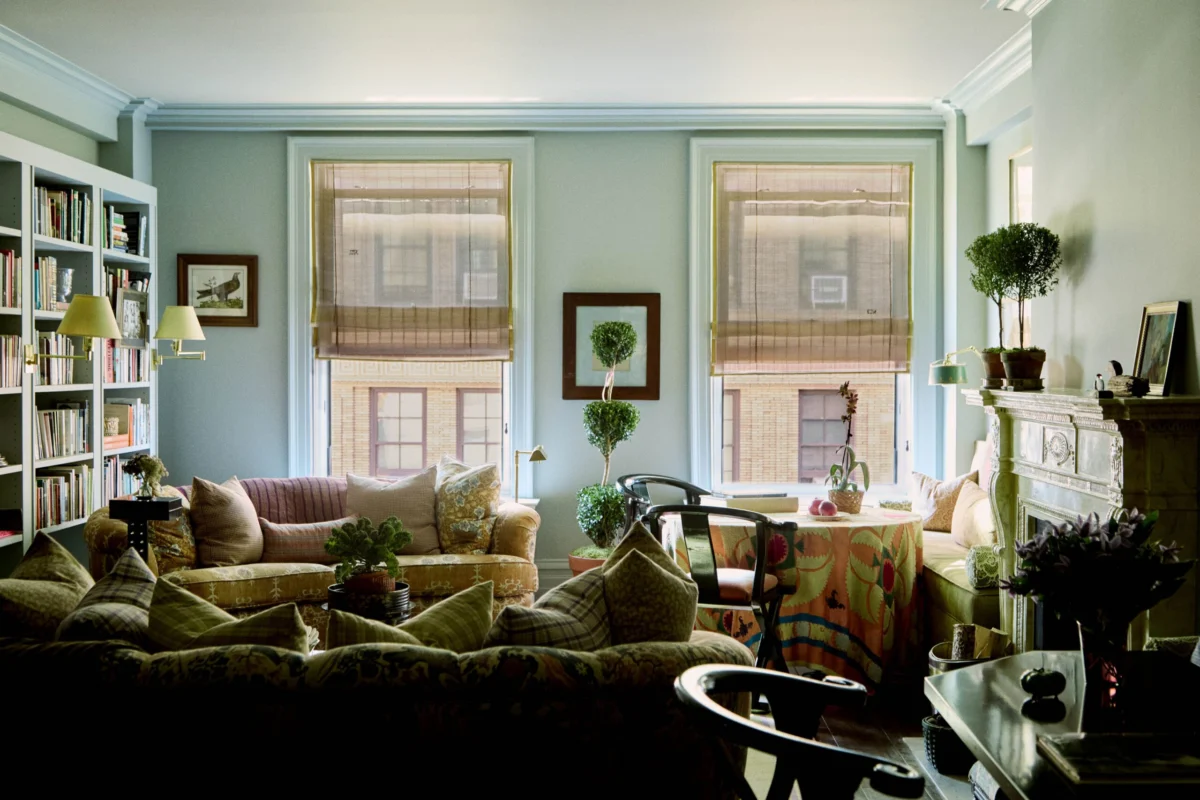
The living room, described by Ruttenberg as "the heart of the project," stands as a testament to the power of bold pattern and rich texture. The space is thoughtfully divided into distinct zones, each serving a specific purpose while contributing to the room’s overall cohesive yet eclectic design.

- The Dining Area: This zone features a custom banquette, elegantly upholstered in a Pierre Frey linen, creating an inviting space for meals and conversation. The dining table is adorned with a vibrant Suzani textile, adding a touch of global flair, while vintage lacquer chairs by James Mont provide a sophisticated and timeless touch. Flanking this area, sconces from Bronzetto cast a warm glow, illuminating framed antique Filipino blouses, a deeply personal and culturally significant decorative element.
- The Lounge Area: On the opposite side of the fireplace, a second banquette offers a more casual setting for work or relaxation. Ruttenberg ingeniously designed a custom table for this area, subtly altering its form to facilitate a smoother circulation path between this lounge space and the room’s primary seating arrangement. This thoughtful design detail exemplifies the project’s commitment to both aesthetics and practical usability.
The reupholstered vintage sofas and an abundance of pillows showcase a spirited collision of diverse prints and textiles. Plaid, gingham, stripes, florals, suzanis, chinoiserie, and the sheer piña fabric from the client’s own line, Tela, are artfully combined. "We of course thought about how these patterns, tones, and materials work together, but we also wanted it to feel natural and not overly engineered," Ruttenberg noted. "There’s an essence of haphazardness or je ne sais quoi." This deliberate embrace of a seemingly spontaneous yet carefully curated mix of patterns creates a dynamic and visually arresting environment that feels both sophisticated and deeply personal.
The Genesis and Impact of Tela Textiles
A significant aspect of the renovation, and indeed the Zobel de Ayala’s personal journey, is the genesis of Eugenia Zobel de Ayala’s fabric line, Tela. Born directly from the collaborative design process, Tela is handwoven in the Philippines and draws inspiration from the textiles she encountered during her upbringing in Manila. Ruttenberg highlighted the shared appreciation for pattern between himself and Zobel de Ayala, noting her desire for fabrics that possessed an "inherent sense of soul and patina." The ability to integrate samples from her nascent collection throughout the apartment served as a powerful validation of her creative vision and a deeply personal touchstone within the design. This symbiotic relationship between personal passion and professional collaboration underscores the project’s unique success.

Curated Artistry and Personal Narratives
The selection of artwork played a crucial role in weaving the personal narrative of the Zobel de Ayalas into the fabric of their home. Ruttenberg recognized their inclination towards "pieces that are a bit unexpected," such as antique textiles. The framed traditional Filipino blouses, positioned above the banquette in the living room, exemplify this preference, serving as both decorative elements and poignant reminders of heritage. This commitment to integrating personal history and cultural significance ensures that the apartment is not merely a beautifully designed space, but a true reflection of its occupants.
Private Sanctuaries: Bedrooms and Bathrooms
The renovation extended to the private quarters, where comfort and personal style were paramount.

- The Primary Bedroom: This serene space features a 1980s brass-and-glass table, ingeniously repurposed as a vanity or desk. It is paired with a vintage James Mont chair and a mirror sourced from Finland, creating a curated vintage ensemble. The window shade fabric, an Etro print, adds a touch of luxury, while the custom headboard is adorned with an antique plaid fabric, further enhancing the room’s layered and personal feel.
- The Guest Bedroom: Enveloped in a grasscloth wall covering, sourced by the client’s mother from the Philippines, this room exudes a calm and inviting atmosphere. The custom headboard is upholstered in an Etro fabric, creating a sophisticated focal point. The bedding itself is a thoughtful juxtaposition of D. Porthault florals and a plaid fabric from the client’s own Tela collection, demonstrating a seamless integration of personal and luxury elements.
- The Guest Bathroom: A refresh of this space introduced Annie Selke tiles and a custom shower curtain crafted from one of the client’s Tela fabrics. This understated yet elegant update ensures the guest bathroom aligns with the apartment’s overall aesthetic.
- The Primary Bathroom: Designed for serenity, this space is elevated by a Murano glass light fixture from the client’s personal collection. Adding a unique artistic touch, custom tiles painted by artist Bettina Elsner feature motifs inspired by the couple’s favorite travel destinations, transforming a functional space into a personalized gallery.
- The Den/Office: One of the apartment’s bedrooms was thoughtfully converted into a den, serving a dual purpose as a cozy media room and the husband’s office. Ruttenberg designed bespoke built-in cabinetry, including a niche specifically designed to accommodate a sleeper sofa from Anthropologie. Artworks by Tom Mae Yokoi adorn the walls, adding a touch of contemporary flair. The desk, inspired by a vintage Hermès wastebasket, cleverly conceals the HVAC unit, demonstrating Ruttenberg’s talent for integrating practical necessities with refined design. The space is completed with a vintage Eames desk chair and an antique kilim rug from Rug & Kilim, creating a warm and functional workspace.
A Testament to Enduring Friendship and Design Excellence
The successful renovation of the Zobel de Ayala’s Upper East Side apartment is a powerful testament to the synergy that can arise when deep personal connections intersect with professional expertise. The project not only resulted in a beautifully realized and highly functional living space but also fostered the development of a new entrepreneurial venture for Eugenia Zobel de Ayala. Ruttenberg’s ability to translate his clients’ desires into tangible, beautiful, and deeply personal elements of design has created an environment that is both a sanctuary and a vibrant expression of their lives. As Ruttenberg reflected, "This may have been our first time working together, but it won’t be our last," hinting at future collaborations that will undoubtedly continue to blend artistry with heartfelt connection. The apartment stands as a living embodiment of their friendship, a space where comfort, style, and personal history converge seamlessly.

0 Comments