
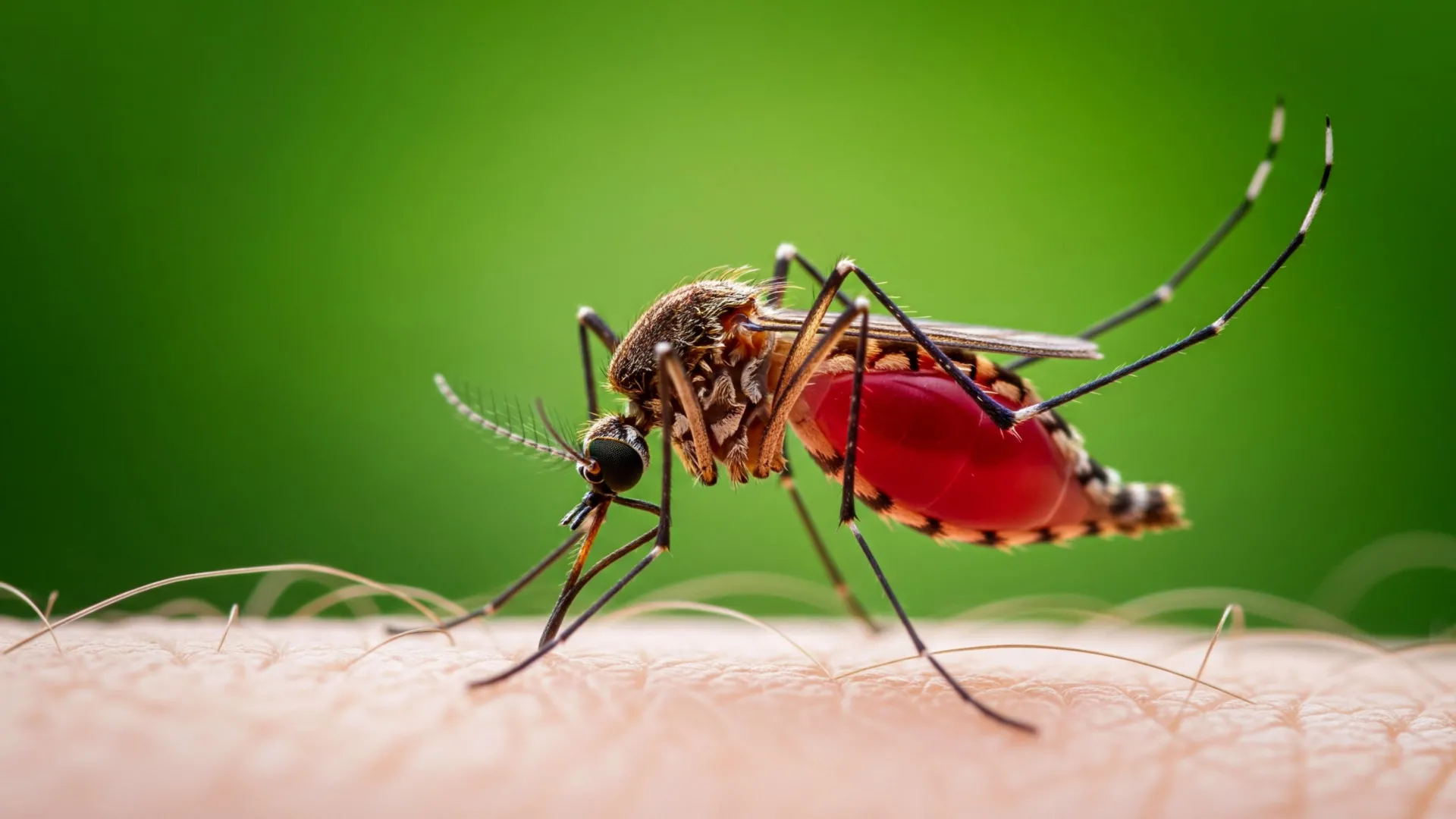
A groundbreaking discovery by researchers at the University of Utah is shedding light on a decades-old mystery surrounding the malaria parasite, Plasmodium falciparum. These microscopic iron crystals, found within every cell of the deadly parasite, have long been observed in constant, frenetic motion. Now, scientists have identified the remarkable chemical mechanism that fuels this internal tempest: a reaction akin to rocket propulsion. This revelation not only offers promising new avenues for combating malaria but also holds significant implications for the burgeoning field of nanotechnology. The findings were recently published in the prestigious scientific journal PNAS.
The Enigmatic Dance of Malaria’s Iron Crystals
For years, the dynamic behavior of iron crystals within the malaria parasite has baffled the scientific community. These crystalline structures, composed of a heme-derived compound known as hemozoin, are integral to the parasite’s lifecycle. Within a specialized organelle, these crystals whirl, bounce, and collide with an almost chaotic energy. This vigorous, unpredictable movement has made them a prime target for antimalarial drug development, yet the underlying cause of their perpetual motion remained elusive.
"People don’t talk about what they don’t understand, and because the motion of these crystals is so mysterious and bizarre, it’s been a blind spot for parasitology for decades," stated Paul Sigala, PhD, associate professor of biochemistry at the Spencer Fox Eccles School of Medicine (SFESOM) at the University of Utah. This sentiment underscores the long-standing challenge that this internal cellular activity presented to researchers seeking to understand and disrupt the parasite’s survival mechanisms.
The immediate cessation of crystal movement upon the parasite’s death further intensified the intrigue. This stark contrast between a living, active parasite and a dying one suggested a fundamental biological process at play, directly linked to the parasite’s vitality. The inability of standard scientific tools to accurately track the rapid and erratic movements of these crystals only added to their enigmatic nature.
Unraveling the Propulsion Mechanism: Rocketry in a Microscopic World
The breakthrough came when Sigala’s team identified the driving force behind the crystal’s energetic dance: the decomposition of hydrogen peroxide. This chemical reaction, remarkably similar to the process used to power rockets, releases energy that propels the hemozoin crystals.
Erica Hastings, PhD, a postdoctoral fellow in biochemistry at SFESOM, explained the significance of this discovery: "This hydrogen peroxide decomposition has been used to power large-scale rockets. But I don’t think it has ever been observed in biological systems." The aerospace analogy highlights the immense energetic potential being harnessed by the parasite at a microscopic scale.
Hydrogen peroxide is naturally produced within the parasite’s cellular environment, often as a byproduct of its metabolic processes. The specialized compartment housing the hemozoin crystals is rich in this compound, making it an ideal fuel source. To confirm their hypothesis, the researchers conducted experiments that demonstrated hydrogen peroxide alone could induce isolated crystals to spin, even when removed from the parasite’s cellular context.
Further evidence emerged from experiments conducted under low-oxygen conditions. By reducing the production of hydrogen peroxide within the parasite, the researchers observed a significant slowdown in crystal motion – approximately half their usual speed. Crucially, this reduction in speed occurred while the parasites remained otherwise healthy, indicating a direct correlation between hydrogen peroxide levels and crystal activity, independent of the parasite’s overall viability.
The Evolutionary Advantage: Why Crystal Motion Matters for Survival
The persistent motion of these iron crystals is not merely a biological curiosity; it appears to play a vital role in the parasite’s survival. Scientists are exploring several compelling hypotheses for this adaptive advantage.
One primary theory centers on the inherent toxicity of hydrogen peroxide. This reactive oxygen species can inflict significant damage on cellular components. The rapid spinning of the hemozoin crystals is believed to facilitate the safe and efficient breakdown of excess hydrogen peroxide. By acting as a catalyst or physical agent in this detoxification process, the crystals may prevent the parasite from succumbing to self-inflicted oxidative stress. This constant internal processing of a dangerous byproduct offers a sophisticated survival mechanism.
Sigala proposes another critical function: preventing crystal aggregation. Hemozoin crystals serve as a storage mechanism for heme, a vital component of hemoglobin that the parasite ingests from the host’s red blood cells. If these crystals were to clump together, their surface area would decrease, thereby limiting their capacity to process and store additional heme. The constant movement ensures that the crystals remain dispersed, maximizing their surface area and enabling the parasite to efficiently manage its heme metabolism. This dynamic state is essential for sustained nutrient acquisition and utilization, crucial for the parasite’s proliferation.
A Double-Edged Sword: Implications for Malaria Treatment and Nanotechnology
The discovery of self-propelled metallic nanoparticles within a biological system opens up a dual frontier of innovation: the development of novel antimalarial therapies and the advancement of microscopic robotic technology.
The researchers believe that these spinning crystals represent the first known instance of a naturally occurring, self-propelled metallic nanoparticle. This unique biological phenomenon suggests that similar propulsion mechanisms might exist in other natural systems, waiting to be discovered.
Implications for Nanotechnology:
The insights gained from studying the hemozoin crystals could significantly influence the design of advanced microscopic robots. The concept of nano-engineered self-propelling particles has immense potential for various industrial applications, including targeted drug delivery, micro-scale manufacturing, and environmental remediation.
"Nano-engineered self-propelling particles can be used for a variety of industrial and drug delivery applications, and we think there are potential insights that will come from these results," Sigala remarked. Understanding how the parasite achieves efficient, chemically-driven propulsion at the nanoscale can provide blueprints for creating artificial systems with similar capabilities. This could lead to the development of nanobots capable of navigating complex biological environments or performing intricate tasks with unparalleled precision.
Implications for Malaria Treatment:
The therapeutic potential of this discovery is particularly significant. Because the mechanism of crystal propulsion is unique to the malaria parasite and absent in human cells, it presents an attractive and specific target for new antimalarial drugs. Therapies designed to interfere with the hydrogen peroxide decomposition at the crystal surface could effectively neutralize the parasite without posing a significant risk of harmful side effects to the human host.
"We think that the breakdown of hydrogen peroxide likely makes an important contribution to reducing cellular stress," Sigala noted. "If there are ways to block the chemistry at the crystal surface, that alone might be sufficient to kill parasites." The specificity of this target is a major advantage in drug development, where minimizing off-target effects is paramount.
Hastings elaborated on the strategic advantage of targeting this distinct biological pathway: "If we target a drug to an area that’s very different from human cells, then it’s probably not going to have extreme side effects. If we can define how this parasite is different from our bodies, it gives us access to new directions for medications." This principle of exploiting fundamental biological differences between pathogens and their hosts is a cornerstone of modern drug discovery.
The research team is now focused on identifying specific molecules or compounds that can inhibit the hydrogen peroxide decomposition reaction at the hemozoin crystal surface. Success in this area could lead to a new class of antimalarial drugs, offering a much-needed weapon against a disease that continues to claim hundreds of thousands of lives annually, particularly in sub-Saharan Africa. The World Health Organization (WHO) reported an estimated 247 million cases of malaria in 2021, with over 619,000 deaths, underscoring the urgency of developing more effective treatments.
A Timeline of Discovery and Future Directions
The journey to this groundbreaking revelation likely involved years of meticulous observation, hypothesis testing, and technological innovation. While a precise timeline for the research leading to this PNAS publication is not detailed in the provided text, the scientific process typically involves:
- Early Observations (Decades Ago): The anomalous, rapid movement of iron crystals within malaria parasites was first observed, sparking curiosity but lacking an explanation.
- Hypothesis Generation (Recent Years): Researchers, including Sigala’s team, began to hypothesize potential energy sources and mechanisms for this movement. The abundance of hydrogen peroxide within the parasite’s environment would have been a key observation.
- Experimental Design and Execution (Ongoing): The team designed and conducted experiments to test the hydrogen peroxide hypothesis, including isolating crystals and observing their behavior in low-oxygen conditions.
- Confirmation and Analysis (Recent): The experimental results provided strong evidence for the chemical propulsion mechanism. Detailed analysis of the data was performed.
- Publication and Dissemination (Current): The findings were submitted to PNAS, underwent peer review, and were published, making the discovery accessible to the wider scientific community.
The future directions stemming from this research are multifaceted. Further investigations will likely focus on:
- Detailed Characterization: A more in-depth understanding of the precise chemical interactions at the crystal surface and their efficiency.
- In Vivo Validation: Confirming the role of this mechanism in actual malaria infections within host organisms.
- Drug Discovery Pipeline: Screening for and developing drug candidates that can effectively inhibit the crystal propulsion mechanism.
- Nanotechnology Applications: Exploring the translation of these biological propulsion principles into functional artificial nanomachines.
Official Recognition and Support
The significance of this research has been acknowledged through substantial funding from major scientific bodies. The work was supported by the National Institutes of Health (NIH) through several grant numbers (R35GM133764, R21AI185746, R35GM14749, and T32AI055434), highlighting the federal government’s investment in critical health research. Additional support came from the Utah Center for Iron & Heme Disorders (grant number U54DK110858), the Price College of Engineering at the University of Utah, and the 3i Initiative at University of Utah Health. Such comprehensive backing underscores the perceived importance and potential impact of this scientific endeavor. It is important to note, as stated in the original text, that the content is solely the responsibility of the authors and does not necessarily reflect the official views of the funding agencies.
The publication of these findings in PNAS, a journal renowned for its rigorous peer-review process and high-impact scientific contributions, further solidifies the credibility and significance of the discovery. The article, titled "Chemical propulsion of hemozoin crystal motion in malaria parasites," marks a pivotal moment in our understanding of parasitic biology and opens exciting new frontiers for both medicine and engineering.

0 Comments