

Recent developments in behavioral psychology and cognitive science have increasingly highlighted a critical, yet often overlooked, component of human interaction: the "last impression." While the "first impression" has long been the subject of extensive professional training and social etiquette, new research and expert analysis suggest that the manner in which an encounter concludes may hold a disproportionate amount of weight in how an individual or organization is remembered over time. This phenomenon, rooted in the way the human brain encodes and retrieves memories, has significant implications for job seekers, corporate leaders, and social participants alike.
The Cognitive Architecture of Memory: Why Endings Matter
The human brain does not record experiences like a continuous video feed; rather, it snapshots specific moments, prioritizing the beginning, the peak intensity, and the conclusion of an event. In psychology, this is known as the Serial Position Effect, which comprises two main components: the "primacy effect" and the "recency effect." While the primacy effect explains why we remember the start of a meeting or a first date with such clarity, the recency effect ensures that the final moments remain the freshest and most accessible data points in the mind’s retrieval system.
Behavioral economist Daniel Kahneman, a Nobel laureate, further refined this understanding through the "Peak-End Rule." His research demonstrated that people judge an experience largely based on how they felt at its peak (the most intense point) and at its end, rather than the total sum or average of every moment of the experience. This means that a mediocre experience with a stellar ending is often rated more favorably than a generally good experience that concludes on a sour or awkward note.
Daniel Pink, a prominent author and researcher on timing and behavior, notes that the human preference for "rising sequences"—experiences that improve over time—is a fundamental aspect of our psychology. "The end of something has a disproportionate effect on how we remember things," Pink stated in a recent analysis of professional interactions. He points to the digital landscape, such as Yelp reviews, as a modern manifestation of this bias. Customers frequently evaluate an entire dining experience based on the final interaction—be it a billing error or a complimentary dessert—suggesting that the conclusion can effectively overwrite the preceding hours of service.
A Chronology of the Interaction: The Three Pillars of Perception
To understand the impact of the last impression, one must view a professional or social encounter as a chronological sequence divided into three distinct phases:
- The Initiation (The Primacy Phase): This is the first impression. The brain is on high alert, making rapid-fire judgments about trust, competence, and status. This phase sets the baseline for the interaction.
- The Duration (The Hazy Middle): As an interaction continues, the brain’s focus often fluctuates. Data shows that the "middle" of experiences is recalled with the least amount of detail. In a 60-minute interview, the middle 40 minutes are frequently condensed into a vague summary in the interviewer’s memory.
- The Conclusion (The Recency Phase): As the encounter nears its end, the brain "re-engages" to record the final data points. This is the "last impression." If this phase is handled with intentionality, it can elevate the entire interaction. If it is handled poorly, it can lead to "memory contamination," where a positive experience is retroactively viewed as negative.
Tactical Execution: Strategies for a High-Impact Exit
Experts in professional development have identified several tactical maneuvers that can assist individuals in mastering the final moments of an encounter. These strategies are designed to project confidence, warmth, and organizational skills.
The Left-Hand Rule and Physical Rapport
One of the most practical tips for professional exits involves the management of personal belongings. Professionals are advised to gather their notebooks, briefcases, or mobile devices in their left hand. This prevents the "fumble" that often occurs when an interviewer or host reaches out for a final handshake. By keeping the right hand free, the individual ensures a seamless transition to physical contact.
Physical contact remains a powerful tool for bonding. Scientific studies indicate that a firm, warm handshake can trigger the release of oxytocin, a hormone associated with trust and social bonding. To maximize this, the handshake should be "palm-to-palm," ensuring the webs of the thumbs connect. This level of contact conveys transparency and confidence, leaving a visceral memory of rapport.
The "Double Thank You" Protocol
Linguistic patterns also play a role in solidifying a positive last impression. The "Double Thank You" is a strategy where an individual expresses gratitude at two distinct points during the departure. The first thank you occurs when rising from the seat, often accompanied by a specific compliment about the interaction (e.g., "Thank you for the opportunity to discuss this project; I found our conversation on strategy particularly enlightening"). The second thank you is delivered at the door, serving as a final, succinct "bookend" to the encounter.
Movement with Intent
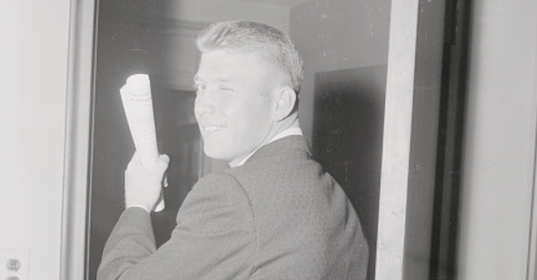
Awkwardness in departures often stems from a lack of direction. Behavioral experts suggest that once a goodbye is initiated, the individual should move with deliberate intent toward the exit. Shifting weight, lingering without purpose, or using "filler" phrases like "Well, I guess…" can dilute the perceived authority of the individual. Moving confidently toward the door signals that the person is decisive and has a clear sense of their next objective.
Data-Driven Insights: The Impact of "Memory Contamination"
The risk of a poor last impression is not merely the loss of a positive memory, but the creation of a negative one that supplants all prior progress. In a study regarding customer service, it was found that a single negative interaction at the point of payment (the end of the customer journey) reduced the likelihood of a return visit by over 70%, even if the initial service was rated as "excellent."
This "memory contamination" is particularly dangerous in job interviews. If a candidate performs exceptionally well for an hour but concludes by realizing they have forgotten their phone or umbrella, the final image the interviewer holds is one of disorganization or "sheepishness." This final data point becomes the "anchor" for the candidate’s professional profile.
The Residual Impression: The Role of Follow-Up
The last impression does not necessarily end when the door closes. In the modern era, the "residual impression" includes digital follow-up. According to HR surveys, while 95% of recruiters say a thank-you note is appropriate, only about 25% of candidates actually send one.
Sending a follow-up text or a formal thank-you note functions as a "re-entry" into the recipient’s memory, extending the recency effect. In social settings, a text expressing gratitude for hospitality reinforces the "rising sequence" mentioned by Daniel Pink. In professional settings, it demonstrates a level of detail-oriented follow-through that sets a candidate apart from the "pack."
Broader Implications for Leadership and Brand Loyalty
The implications of the last impression extend beyond individual career advice and into the realm of corporate strategy and leadership. Organizations that prioritize the "end-user experience" at the very conclusion of a service cycle often see higher brand loyalty.
For leaders, the way they end a meeting can dictate the productivity of their team for the remainder of the day. A meeting that ends with clear action items and an encouraging closing statement (an "elevating" ending) fosters a sense of momentum. Conversely, a meeting that "peters out" or ends in unresolved conflict can lead to a phenomenon known as "meeting recovery syndrome," where employees spend significant time processing the negative conclusion rather than working on tasks.
Analysis: The Psychological "Finish Strong" Mandate
The overarching lesson from behavioral science is that an interaction is never truly over until the memory of it is solidified. This provides a unique opportunity for "recovery." Even if the "muddling middle" of a conversation or interview was less than perfect, a focused and intentional conclusion can salvage the relationship.
Human beings are wired to prefer narratives that improve over time. By being conscious of the "Peak-End Rule" and employing tactical physical and verbal cues, individuals can ensure that they are not just remembered, but remembered in a way that elevates their professional and personal standing. As the data suggests, the first impression may get you in the door, but the last impression is what determines whether that door remains open for future opportunities.
In a competitive global environment where "soft skills" are increasingly valued alongside technical expertise, mastering the art of the exit is no longer a matter of mere etiquette—it is a strategic necessity. Finishing strong is not just a motivational cliché; it is a scientifically backed method for influencing human perception and ensuring long-term success.

0 Comments